|
|
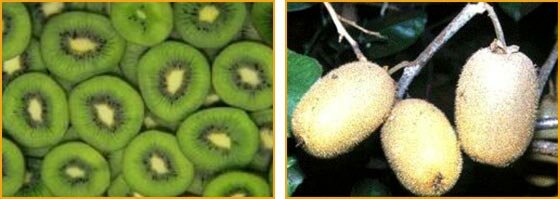
The kiwi is cultivated mainly for his fruit. It can be used as fresh, in fruit salads and in the pastry making. Is a fruit rich in vitamin C.
|
|
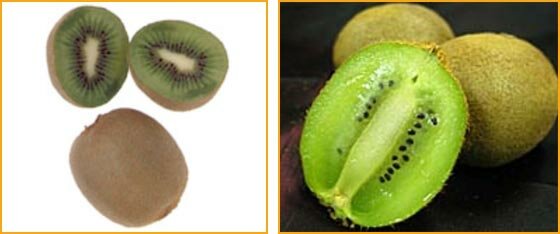
 Also the fruit of kiwi contains the proteinsolvent ferment, aktinidin. It is reported that, because of this ferment, the greasing of steak with fresh fruit for ten minutes, before its cook, renders it softer. It can be also used for the production of compote, jam and juices, as well as for canning.
|
|
 Organic cultivation of kiwi is based on the application of suitable farming techniques, which main aim is the proper nutrition of the plant with direct result at the high quality of the produced fruit.
|
|
|
Chemical composition of kiwi fruit (per 100 gr)
|
| Water (%) |
81.2 |
| Calories |
66 |
| Protein (gr) |
0.79 |
| Fat (gr) |
0.07 |
| Carbohydrates (gr) |
17.5 |
| Vitamin Α (Ι.U) |
174 |
| Vitamin Β1 (mg) |
0.02 |
| Vitamin Β2 (mg) |
0.05 |
| Vitamin C (mg) |
150 |
| Calcium (mg) |
16 |
| Phosphor (mg) |
64 |
| Iron (mg) |
0.51 |
| Sodium (mg) |
7 |
| Potassium (mg) |
264 |
|
|
More information about organic cultivation:
- Full-text papers in electronic form together with bibliographic information, abstracts and other metadata in Organic Eprints
- References about Organic Agriculture in the website of Research Institute of Organic Agriculture FiBL
- Special reviews in Organic Agriculture in the website of Organic Farming Research Foundation
- An Abstracts Database on scientific research on organic agriculture and other information relevant to organic farming research in organic-research.com
|
|

click to see the organic producers of our network
Analytic information about the places of processing, packing and marketing in Western Greece is presented in Organic Market
|
|